Appointed subcustodians
Some markets are restricted for UCITS funds investment – please refer to your depositary team
UAE - Abu Dhabi
Updated as at January 5, 2023
Market Account Opening Requirements
FII Market Entry Requirements for United Arab Emirates RBC IS operates a segregated account structure in this market. Please refer to 'Market Account Opening Requirements' for information on the market requirements. Clients are requested to refer to the requirements for information purposes only. For further information or support around accessing this market, please contact your RBC IS representative. |
Market Statistics
| Currency | UAE Dirham (AED) | ||||||||
|---|---|---|---|---|---|---|---|---|---|
| Time Zone | GMT + 4 | ||||||||
| Abu Dhabi Securities Exchange (ADX) |
|
Market Infrastructure
| Exchange(s) | Abu Dhabi Securities Exchange (ADX)
The ADX was established with an aim to lead the development of capital market in UAE by expanding into a cost effective and self regulated marketplace, in a lawful environment that ensures integrity, transparency and disclosure. The ADX's board of directors is comprised of nine members nominated by the Amiri decree. The members of the Board hold office for a term of three years. |
||||||||||||
|---|---|---|---|---|---|---|---|---|---|---|---|---|---|
| Trading System | The ADX uses Equator and OMX X-Stream Horizon systems for market operations. |
||||||||||||
| Trading Hours | 10:00AM - 3:00PM (Monday to Friday)
|
||||||||||||
| Security Identifiers | ISIN (International Securities Identification Numbering): Yes |
||||||||||||
| Regulatory Bodies | The Securities and Commodities Authority (SCA) - established in February 2000, SCA is responsible for developing the UAE capital market. The Federal Government appoints board members, and it acts as the regulator for both stock exchanges, the DFM and the ADX. The main objective of SCA is to supervise the various participants in the market and enforce their compliance with the laws, rules and regulations, and to ensure transparency in the working of the market to create the ideal investment environment, by monitoring all trading activities and changes in the market, and analysing movements and market information. In addition, they require listed companies and brokers to submit regular reporting and maintain compliance responsibilities. |
||||||||||||
| Instruments |
|
||||||||||||
| Form of Securities | ADX is a scripless market where registration takes place automatically via book-entry at the CSD. All securities are registered and held at the depository in the name of the beneficial owner. |
||||||||||||
| Board Lots |
|
||||||||||||
| Price Variations | For equities, the minimum price variation unit is AED 0.001. |
Settlement & Registration
| Settlement Cycles |
|
||||||||
|---|---|---|---|---|---|---|---|---|---|
| Delivery versus Payment (DvP) Settlement Currencies | AED |
||||||||
| Over-the-Counter (OTC) | Not applicable. |
||||||||
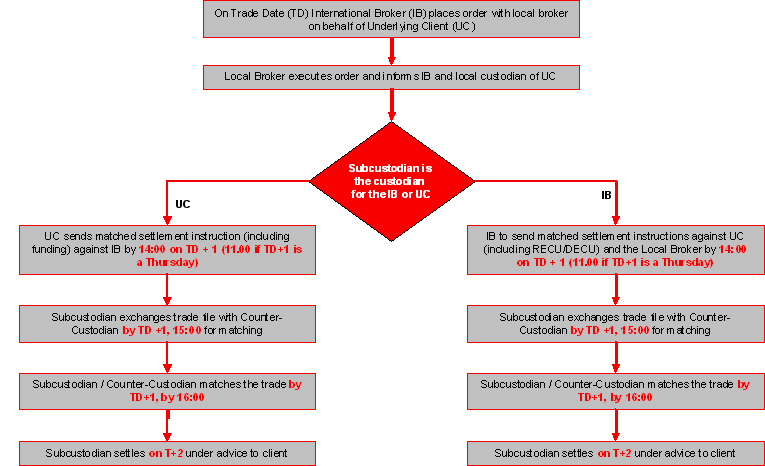
| Settlement Procedures | With the implementation of DvP the following will apply to trading on the ADX:
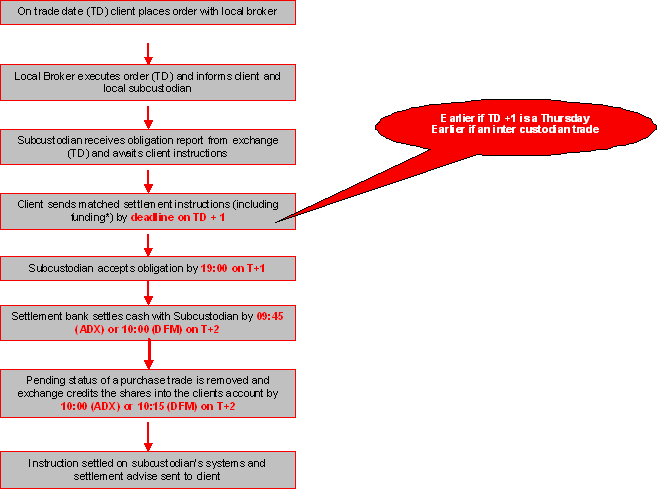
*Please note that market charges/fees may apply to late settlement post T+2 and will be deducted from the sales proceeds by the market. The following is a broad description of how settlement takes place: The Abu Dhabi Securities Exchange (ADX) implemented Delivery versus Payment (DvP) settlement mechanism from May 29, 2011. The need to set up and operate with a dual account structure is still a major concern to a number of international institutional investors and is incompatible with general emerging markets standards. International institutional investors often establish segregated custody and trading accounts in order to mitigate the risk from local brokers having unlimited access to the trading accounts. This results in the significant operational burdens of having to transfer shares from one account to the other prior to trade. Local brokers have 'execution access' to client's Agent Trading account, and brokers may sell assets without relevant instructions from clients. The DvP model seeks to address these issues by enabling local custodians to reject purchase and sale trades which clients do not recognise (or have not sent matching instructions for). With the DVP model implemented, the Sub-Custodians have better control & protection over client assets and especially with added feature of "Buyer Cash Compensation (BCC) - a measure provided by the markets whereby sellers assets are protected, if he irrevocably rejects a sell trade, which they do not recognise & treat it as a bad trade. The Abu Dhabi Securities Exchange (ADX) has issued updated operational guidelines on their DvP model. Details of the settlement flow - (as per RBC Investor Services' subcustodian) for foreign institutional investors (FIIs) are provided as follows: 1. Direct / Turnaround purchase trade settlement - DFM / ADX obligation accepted by subcustodian
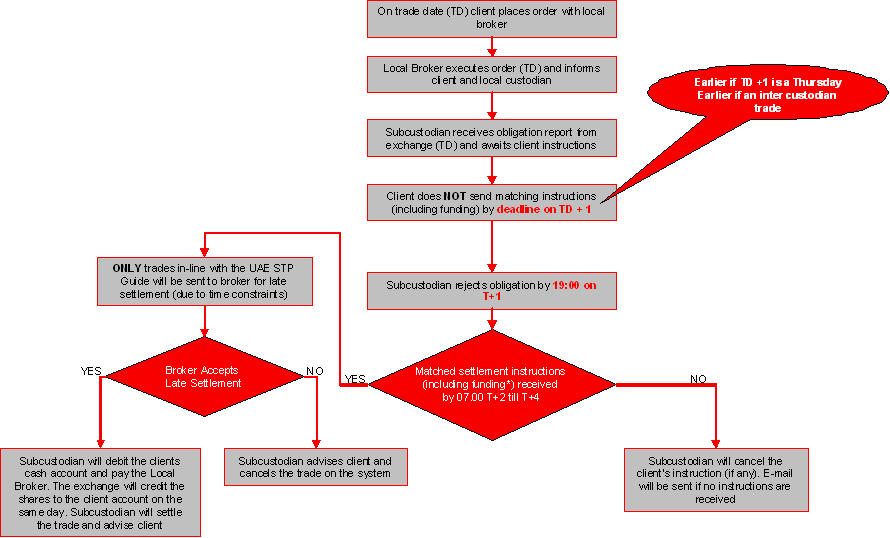
2. Direct / Turnaround purchase trade settlement - DFM / ADX obligation rejected by subcustodian
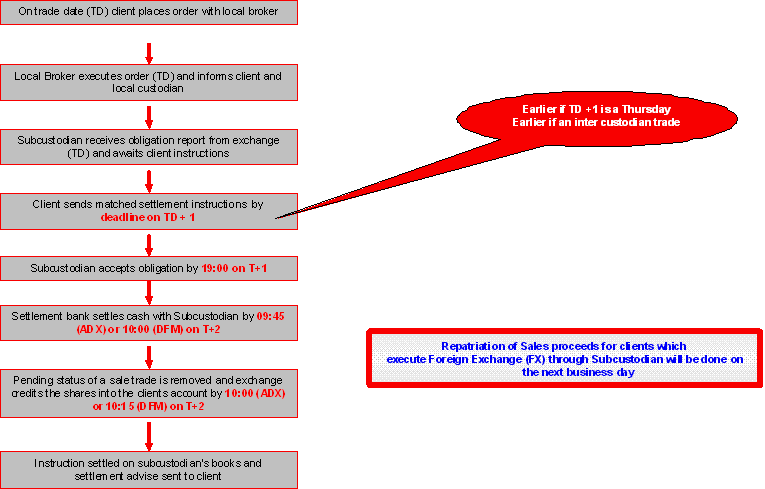
3. Direct / Turnaround sell trade settlement flow - DFM / ADX obligation accepted by subcustodian
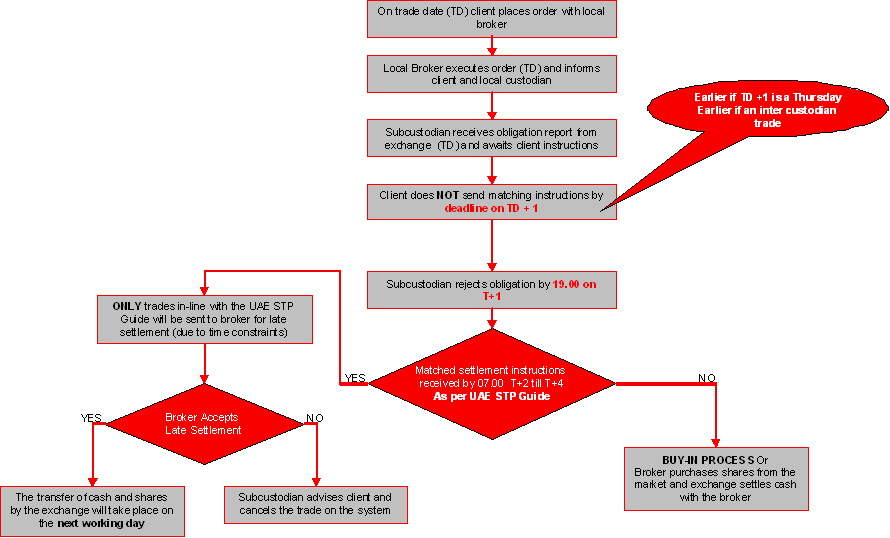
4. Direct / Turnaraound sell trade settlement flow - DFM / ADX obligation rejected by subcustodian
5. Inter custodian turnaround trade settlement flow
Market Risks:
In case of sale trades, investors need to move securities from the depository account to the trading account prior to the execution of trades in the market. The broker can execute a sell trade by using the client NIN number, but they cannot view the trading account of the client with the subcustodian and only has access to client trading account maintained by them. However with the implementation of DVP model, the Sub-Custodians have better control & protection over client assets and especially with added feature of "Buyer Cash Compensation (BCC) - a measure provided by the markets whereby seller's assets are protected, if he irrevocably rejects a sell trade, which they do not recognise & treat it as a bad trade. Similarly, in case of purchase trades once the payment is done the securities are first received in investor's broker trading account and are automatically moved by DFM system to client's trading account under subcustodian. The brokers could execute a sale merely by putting an order to the DFM system and if the quantity matches, the shares will automatically move out. To mitigate this risk, it is suggested that investors move shares from the trading account to the CSD account maintained for each investor. Once shares are moved to CSD account no trades can be executed, until and unless the investor gives instruction to move the shares to the trading account. The subcustodian can support the setting up of standing instructions for the movement of shares to the CSD account for all purchases. However, it is mandatory for investors to provide a pre-sale advice prior to the execution of the sale trade on the exchange. However, it is acknowledged that on or before SD+1 the bought securities in the trading account could be blocked due to a sale transaction executed by a local broker and hence subcustodian will not be able to move these securities into the investor registry account. It is also acknowledged that these blocked securities could be delivered out in settlement of the rejected sale transaction in cases where the DFM enforces cash close out for such rejected sale trade as part of their fails/ buy-in mechanism. |
||||||||
| Short Selling | In September 2016, the SCA transferred some of its governance role to the local exchanges thus allowing the DFM and ADX to set the required rules/procedures for certain activities including- market making, stock borrowing and lending and short selling, enabling the local exchanges to create a more vibrant market. Within SCA’s new framework, the DFM and ADX have worked on updating the rules and procedures on introducing SLB and short selling. The Dubai Financial Market (DFM) exchange recently issued rules and general procedures for Securities Lending and Borrowing (SLB). Further, the Abu Dhabi Securities Exchange (ADX) implemented Technical Short Selling (TSS) service. |
||||||||
| Turn-around Trades | Turnarounds trades are only allowed in ADX and the same has to be arranged by the local broker. Since May 2014, ADX amended trading practice to enable same day execution of matching orders (buy and sell) on the same NIN and security at the same price through same/ different brokers. This new practice applies to the following types of Investors: Direct Market Access (DMA), Funds, ETF issuers, Institutional Investors and Professional Investors. |
||||||||
| Clearing Agents | ADX registered Brokers & Sub-custodians act as Clearing Agents through the ADX appointed Settlement Bank. |
||||||||
| Depositories | The central depository is part of the ADX and therefore is overseen and managed by the ADX. |
||||||||
| Bank for International Settlements (BIS) Settlement Model | BIS is an international organisation which fosters cooperation among central banks and other agencies in pursuit of monetary and financial stability. The Committee on Payments and Market Infrastructures (CPMI) uses three common structural approaches, or models, to categorise the links between delivery and payment in a securities settlement system. |
||||||||
| Registration Process |
|
||||||||
| Registrar | All shares are registered and held at the ADX CSD department in scripless form and must be in the name of the beneficial owner. |
||||||||
| Registration Period | The normal registration period is not applicable, as the transfer of ownership occurs simultaneously with settlement. |
Risk
| Disclosure Requirements | Share holdings may be required to be disclosed by the beneficial owner, particularly when holdings reach or exceed prescribed disclosure limits. Investors must ensure that they comply in full by reporting such holdings to the appropriate organisations for this market, within the timeframe required. If you have any questions regarding this issue we encourage you to consult your legal counsel.
The official letter should be directed to the relevant department of the ADX and to the Disclosure Department of the Securities and Commodities Authority (SCA). The letter maybe delivered either as a hard copy [courier], fax, or e-mail as long as the confirmation of the receipt is done by the counterparty.
|
||||||||
|---|---|---|---|---|---|---|---|---|---|
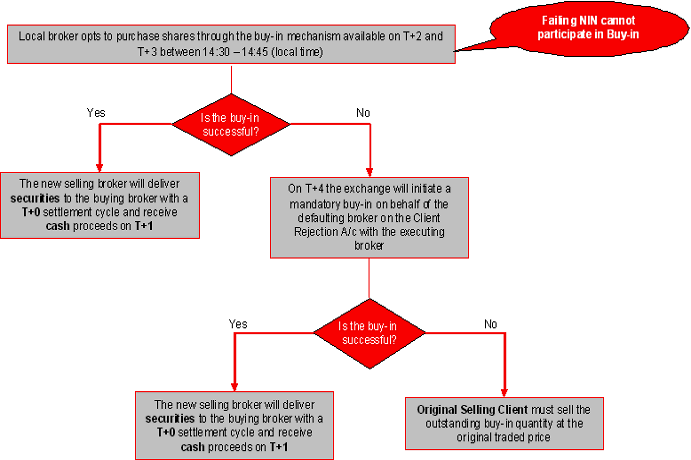
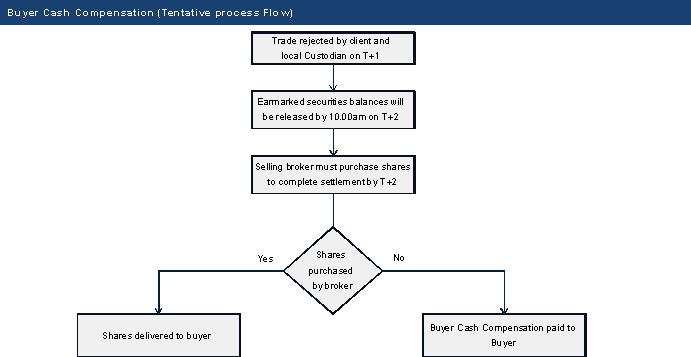
| Buy-Ins | Buy-ins and Buyer Cash Compensation (BCC) procedures are applicable in the market with the DvP model implementation - details provided as follows: Buy-in mechanism for rejected trades
Effective from trade date September 4, 2011, trades processed under the late confirmation window will be subject to the following penalties:
Order fee- AED 10 will be applied if total trading commission is less than AED 65) |
||||||||
| Securities Lending | Within SCA’s new framework, the DFM and ADX have worked on updating the rules and procedures on introducing SLB and short selling. The Dubai Financial Market (DFM) exchange recently issued rules and general procedures for Securities Lending and Borrowing (SLB). Further, the Abu Dhabi Securities Exchange (ADX) implemented Technical Short Selling (TSS) service. |
||||||||
| Compensation Fund | Presently there is no guarantee fund for investor protection in the UAE. |
||||||||
| Anti-Money Laundering | The key regulations and initiatives in this respect issued by the Central Bank of the UAE include, but are not limited to:
|
Foreign Ownership
| Market Entrance Requirements | This is an FII market. Please contact your RBC Investor Services' Client Manager before making portfolio investments. |
|---|---|
| Investment Restrictions | Effective June 1, 2021, new Commercial Companies Law allows full ownership by foreign investors of their onshore businesses, rather than the previous 49% limit and the requirement of an Emirati individual or Emirati company to hold the remaining 51%. The new law will not apply to companies that are wholly owned by federal, local governments, their subsidiaries, or those excluded based on a decision by the Cabinet. |
| Repatriation Policy | Capital gains and income can be repatriated freely, provided that the transfers are made through a registered trading bank or an authorised foreign exchange dealer. |
Cash
| FX Regulations | There are no currency restrictions in UAE and the local currency is freely convertible against most major currencies of the world and is pegged to the USD at a rate of AED 3.6725 (as at July 2008), which has the ability to move a few points up or down depending on availability of cash at the Central Bank on a specific date. |
|---|---|
| Payment Systems | The settlement bank for the ADX is the National Bank of Abu Dhabi. All brokers and subcustodians are required to maintain accounts with the settlement bank(s) to facilitate ADX settlements. All cash settlements take place between 10:00 and 12:00 on T+2 in the settlement bank(s) books, where as shares would move in ADX between buyer and seller on T+2 from 08:00 to 10:00 on T+2. |
| Overdraft Permitted | As per Central Bank of UAE rules and regulations, overdrafts are not permitted on securities cash accounts. |
Entitlements
| Dividend Process | The distribution of cash dividend handled by the CSD department of ADX based on the holdings in the CSD. |
||||||
|---|---|---|---|---|---|---|---|
| Dividend Payment Frequency | Companies do most dividend payments during March and April. There is no concept of a fixed pay date. |
||||||
| Interest Payment Frequency | Dividends on equity are generally paid annually. Interest on corporate bonds is usually paid semi-annually. |
||||||
| Interest Accrual Rate | Not applicable. |
||||||
| Corporate Actions |
|
||||||
| Additional Information | For ADX, market claims would be applicable due to late settlement window and entitlements would be paid directly by the company based on the settled positions / holdings in the CSD as of record date. The Impact of DvP on Corporate Actions is as follows:
In the case of an error trade, the client will not receive the corporate action proceeds and will have to claim the benefit from the local broker. The Local broker must replace the securities sold in error plus any relevant corporate action due to the client. |
||||||
| Protection of Rights | Entitlements are based on the settled position as at the close of trading on the record date. Currently Rights are not tradable. CDS as of record date. |
Proxy Voting
| Foreign Investor Restrictions | There are no additional documents required for proxy voting except for the Power of Attorney given at the time of opening the account. |
|---|---|
| Shares Blocked | Trading is suspended if an AGM is in session during the trading hours. The particular shares of the company would not be traded up until the end of the AGM. However, if the AGM is held after trading hours, the shares would be traded at the ADX as on a normal trading day. |
| Meeting Notices/Agendas | The agendas are required to be provided in a meeting announcement and they are generally available in Arabic and thus require translation into English by the subcustodian. |
| Meeting Outcome | Voting results will be reported on the next day after the meeting date. The results are published on the ADX website and in local newspapers. |
| Company Reports | The listed companies are required to make disclosures in regular intervals as per SCA rules and regulations. |
| Power of Attorney | A duly notarised two tier Power of attorney (PoA) is required. This is submitted to the Abu Dhabi Securities Exchange (ADX) with a copy of the custody agreement. |
| Other | There is no additional document required for proxy voting. The POA provided at the point of account opening is sufficient. |
Taxation
| Dividend Tax Rate | Not applicable. Currently, there are no taxes levied on foreign investors on their securities investments in the UAE. |
|---|---|
| Interest Tax Rate | Not applicable |
| Capital Gains Tax Rate | Not applicable |
| Tax Treaties | Not applicable |
| Stamp Duty | Not applicable |
| Other Taxes | 5% value added tax (VAT) is applicable on the trading fees (collected by the respective Clearing, Settlement and Depository [CSD] division) for all executed trades. |
Holiday Calendar
Local Websites
|